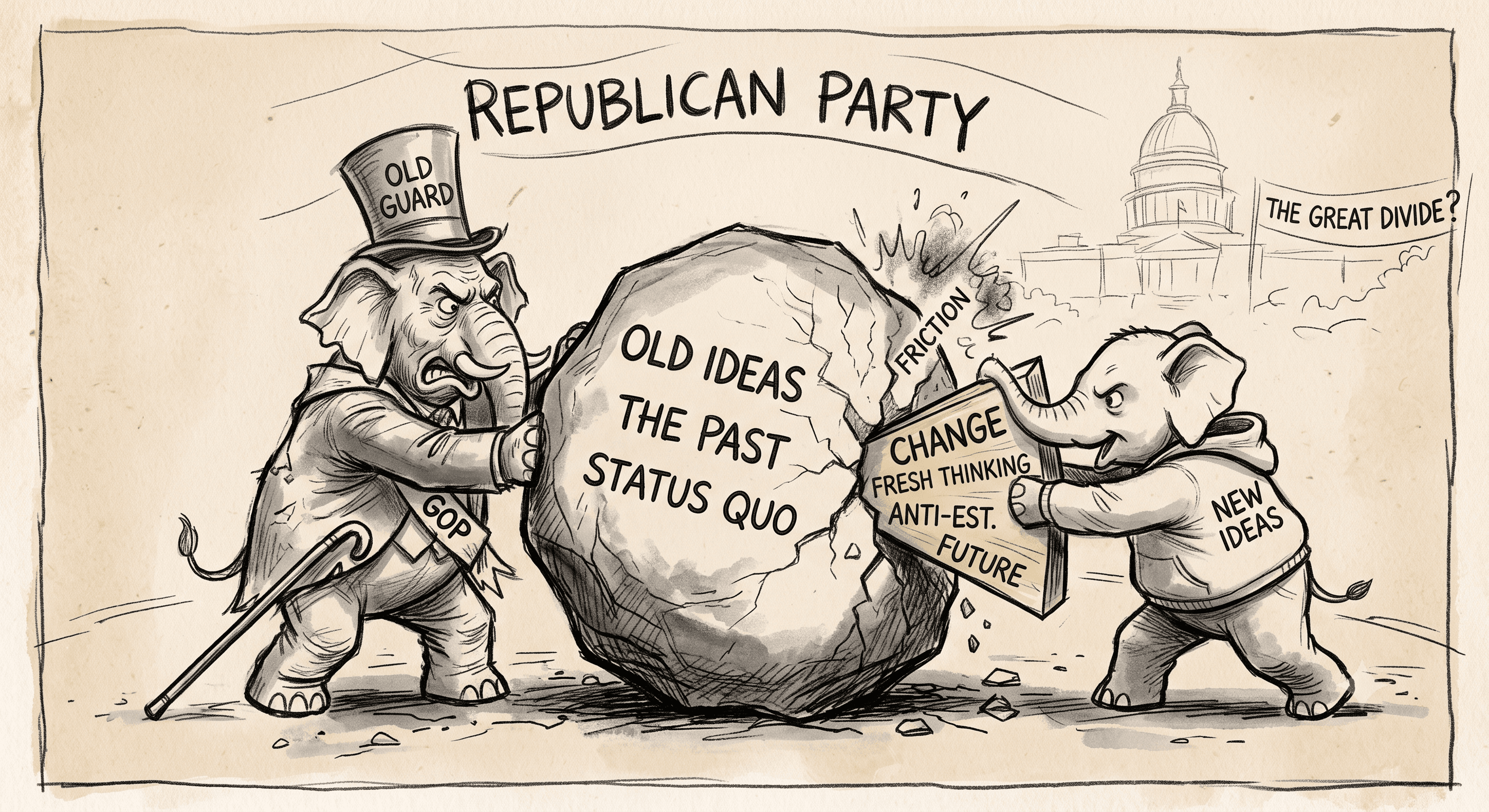
The Conservative Movement Has Always Needed Friction. It Is How Progress Works.
Share
Throughout GOP history, internal friction caused by younger conservatives hasn't divided the party; it has pushed it forward.
Nobody likes disagreement inside their own coalition. It is uncomfortable. It creates headlines. It gives the other side something to point at. And so the instinct in any political party, when a faction pushes back against the establishment, is to tell them to fall in line, wait their turn, and trust that the people who have been doing this longer know what they are doing.
That instinct has been wrong every single time it has mattered most in the history of the Republican Party.
The moments that actually moved conservatism forward were not the moments of comfortable consensus. They were the moments when someone inside the coalition was willing to create friction, to say that the current direction was not working and that something different needed to be tried. More often than not, those someones were young.
What the History Actually Shows
The Young Republican National Federation was officially chartered in 1931. In the nearly 100 years since, it has played a consistent role in the Republican Party that the party establishment does not always appreciate in the moment but cannot deny in retrospect: it has been the organization willing to challenge the direction of the party when the direction needed to be challenged.
In the 1960s, the Young Republicans were not a polite auxiliary organization content to stuff envelopes and stay quiet. They were a contested, divided, internally combative organization that reflected the larger war inside the Republican Party between its moderate and conservative wings. When Barry Goldwater's candidacy forced the party to make a fundamental choice about its ideological identity in 1964, the Young Republicans were in the middle of that fight. Their internal debates mirrored the party's own, and the conservative faction that prevailed inside the organization helped lay the groundwork for the ideological shift that defined the GOP for the next two decades.
By 1967, the Young Republican National Federation had become one of the clearest signals that something new was coming. When the YRNF held its national convention in Omaha that June, Ronald Reagan, who was the current Governor of California, was the undeniable star. Nixon did not send personnel. Rockefeller did not show up. Reagan came in person, and the reception he received from that room full of people under 40 told anyone paying attention which direction the wind was blowing years before it became obvious to the rest of the party.
The establishment did not love this. The establishment rarely loves the people who turn out to be right early.
By 1984, Young Republican-driven youth outreach had helped Republican self-identification among voters under 30 rise from 18% to 27% in just four years. Reagan himself acknowledged the YRNF's role directly after his 1980 victory, crediting young conservatives with making the difference between winning and losing. The friction of the 1960s produced the coalition of the 1980s.
That is not an accident. That is how movements work.
What Friction Is Not
We want to be precise about what we mean here, because the word gets misused.
Friction is not disloyalty. Friction is not working against the party in general elections or undermining candidates who have already won their primaries. Friction is not performative rebellion for its own sake, and it is not an excuse for bad behavior or personal attacks on people who have given years of service to the conservative cause.
Friction is the honest, substantive disagreement that happens when a younger generation looks at the direction the party is heading and says: this is not working, and here is what we think needs to change. It is making that argument publicly, specifically, and with the receipts to back it up. It is being willing to be unpopular in the short term because you believe the position is right in the long term.
The Republican Party in Georgia right now is in a strong position by most measures. Supermajorities in both chambers. Every statewide office. A legislative record in 2026 that includes real tax relief, meaningful education reform, and genuine public safety investment. We have written about all of that because it is true and it matters.
But being in a strong position does not mean the work is done. It means the stakes of the next decisions are higher.
Where the Friction Is Coming From Now
The honest version of the "Same Party, Different Energy" conversation that has been unfolding in Walton & the surrounding counties is not about disrespecting what the establishment has built. It is about something more fundamental.
The local GOP has deep institutional knowledge, long-standing relationships, and decades of hard work behind it. That is real and it deserves real credit. What it sometimes struggles with, by design and not by fault, is moving at the speed their respective county requires.
The WCYR's friction with the establishment is not personal. It is structural. We are built for agility. We do not have bylaws that require six weeks of notice to change an agenda item. We do not have to navigate a hierarchy of committee chairs before we can execute a voter outreach event. We can decide on Monday that something needs to happen on Saturday and make it happen.
That speed is not a criticism of the our sister organization. It is a different capability that the conservative movement needs both of.
The friction we are talking about creating is not "let's fight about who gets credit." It is "let's have the honest conversation about what the conservative agenda in Walton County should actually look like for the next generation." It is pointing out, as we have in previous posts, that running on the same issues
that were settled a decade ago is not a strategy for winning new voters. It is asking, publicly and specifically, what we are going to do about housing affordability, infrastructure, and economic opportunity for the people who are moving to this county right now.
Those conversations are uncomfortable. They are supposed to be.
Why the Establishment Should Welcome This
Here is what the history shows, and what we would argue to any skeptical member of the Walton County Republican Party who reads this.
The Young Republicans have never been most useful to the conservative movement when they were docile. They have been most useful when they were energized, organized, and willing to push. The friction of the 1960s did not divide the Republican Party permanently. It clarified it. The arguments that got fought inside the party in those years produced a sharper, more coherent conservative vision that Reagan then carried to two of the largest electoral victories in modern American history.
The same pattern holds at the local level. A local Republican Party that has an active, occasionally argumentative, consistently engaged young chapter is a stronger party than one with a dormant auxiliary that shows up twice a year to help with voter registration. The friction produces better candidates, sharper arguments, and more durable coalitions than comfortable agreement ever has.
We are not trying to replace the institution. We are trying to do what every generation of young conservatives before us has done: push it forward, even when pushing is uncomfortable, because that is the only direction worth moving.
Starting from this post onward, there will be discussions that might make some people uncomfortable, and that is okay. The conversations we are starting in Walton County are not threats to the Republican Party. They are exactly what a healthy party looks like from the inside.
Keep reading
More articles
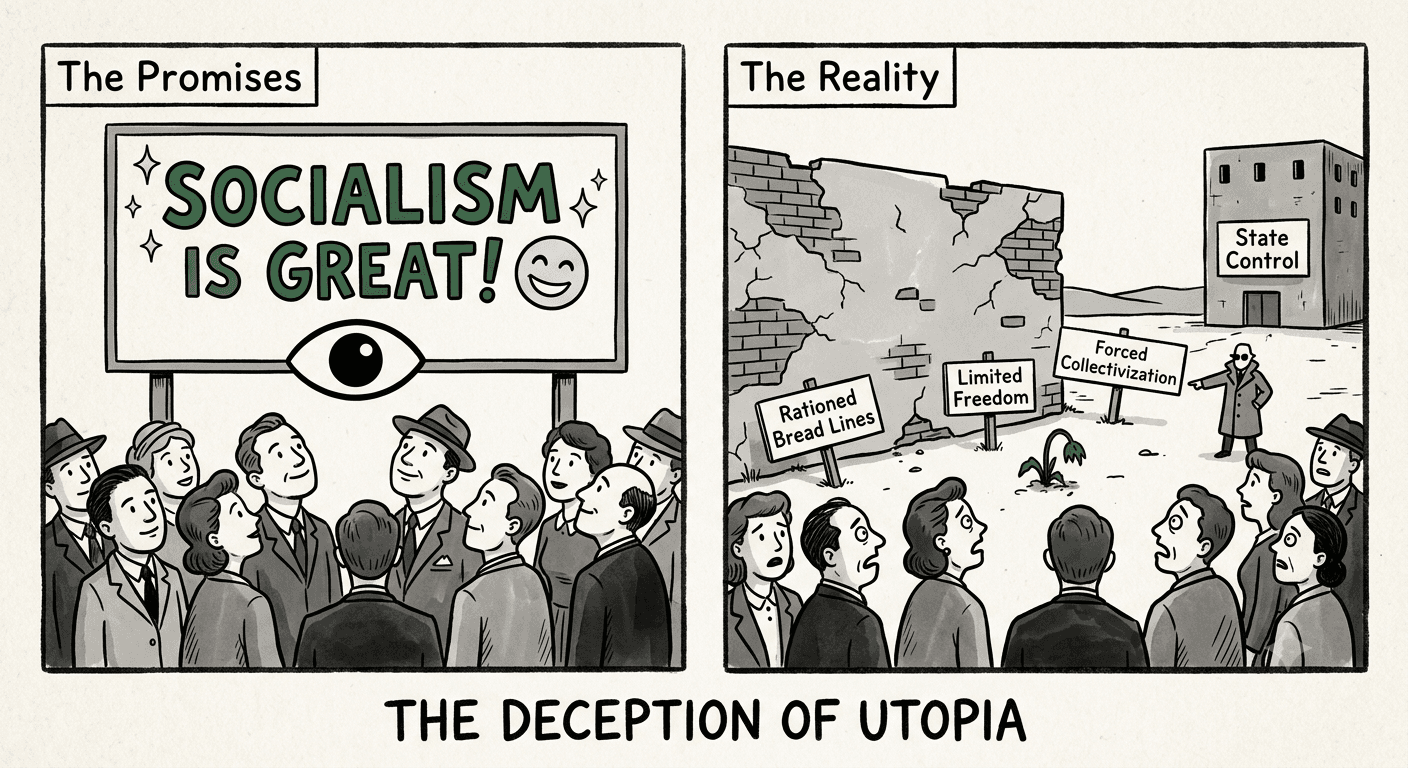
Socialism Sounds Great Until You Look at How It Actually Works
By John Breedlove · July 21, 2026
62% of young Americans say they support socialism. We get why. We also think they're wrong. Here's our case, and an open invitation to argue back.
Read More
250 Years of the Freest Nation on Earth. Don't Take It for Granted.
By Walton YR Board · July 3, 2026
Two hundred and fifty years ago, fifty-six men signed their names to a document that was, at the time, a death sentence. Here's what we owe them.
Read More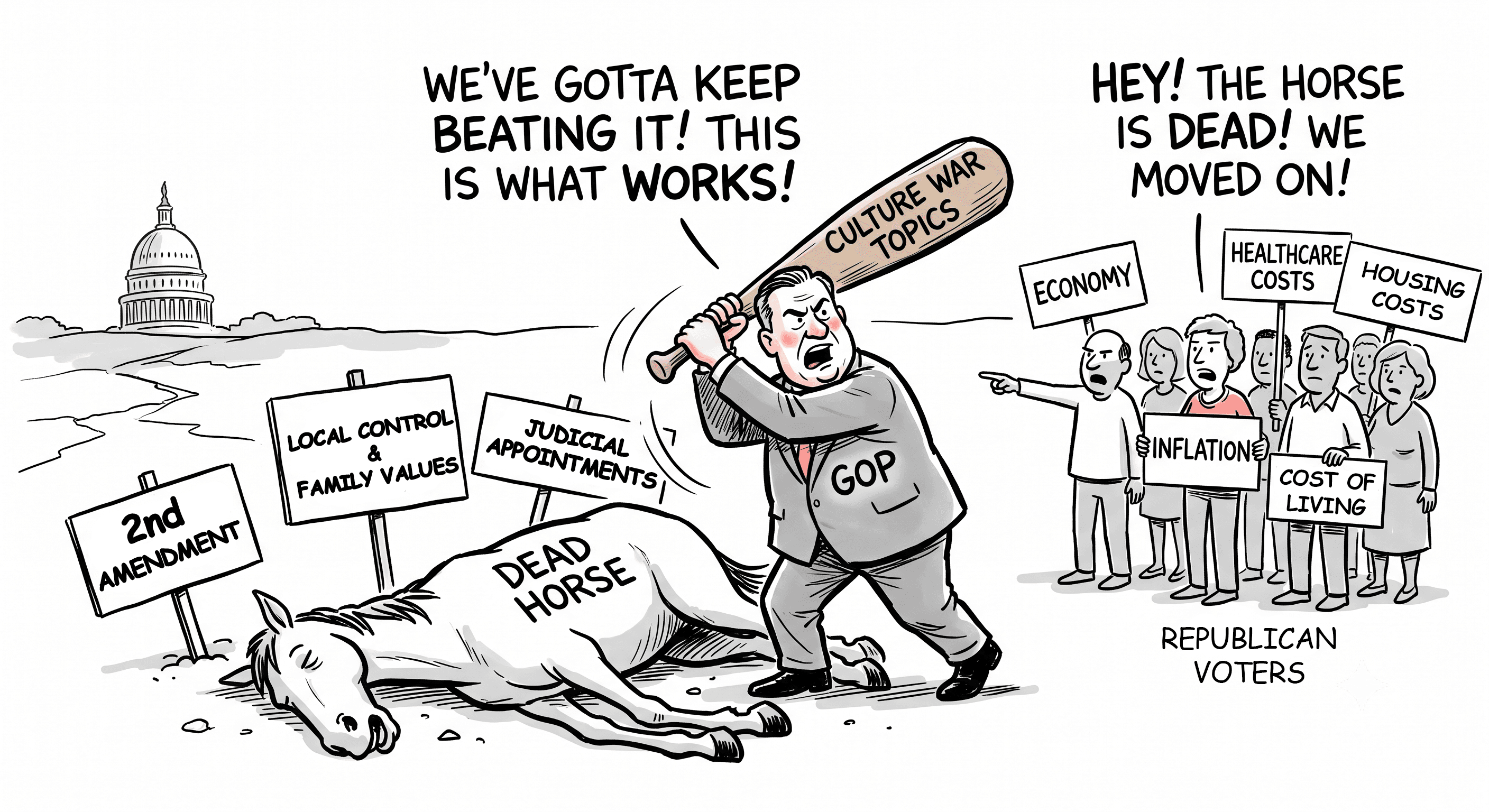
We Won the Argument. It's Time to Move On.
By John Breedlove · June 30, 2026
A party that keeps running on battles it already won is a party that has stopped thinking about what comes next. Georgia conservatives must look forward.
Read More